Innovation starts with a ball made of rags and bags
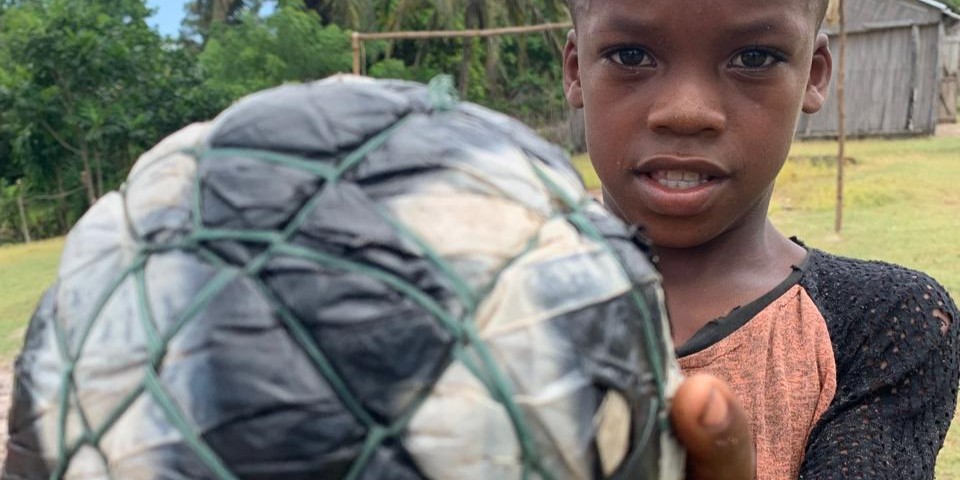
I am always struck by the ingenuity of the children I meet at the schools. Their homemade footballs are a testament to their spirit – they find solutions; they create the means themselves.
However, there is a specific kind of magic in replacing that bundle of rags and bags with a professional football. I’ve had the privilege of doing this several times, and the shift in atmosphere is indescribable.
When we provide proper equipment, we aren’t just facilitating exercise. We are telling these children that their “small wins” are seen and valued. We are giving them the chance to move from “making do” to “mastering the game.” In a world where they often have to fight for every resource, a real ball is a rare, tangible reminder that they are worth the investment.
The Physics of Play: Why a Football is More Than a Toy
I recently visited a local school where I met a young boy proudly showing off the football they use every day. It wasn’t leather or synthetic; it was a homemade sphere of rags, plastic, and net.
It is a masterpiece of resourcefulness. But it also is a reminder of the necessity of play – and why I’ve made it a point to bring “real” footballs to these kids whenever I can.
The Classroom Without Walls
We often think of school as a place of desks and blackboards. But many critical lessons happen on the dirt pitch. When they play, they aren’t just burning off energy; they are engaging in a complex laboratory of human development.
- Social Intelligence: Without a referee, every foul and every goal is a lesson in negotiation. They learn to settle disputes, respect boundaries, and advocate for themselves.
- Strategic Thinking: Football is moving geometry. Even with a ball that doesn’t bounce predictably, these kids are calculating trajectories, positioning, and exercising teamwork in real-time.
- Resilience & Small Wins: In a challenging daily environment, a successful pass or a team goal provides a “small win.” These dopamine hits are crucial for mental health and building the grit needed to tackle academic challenges later in the day.
Why “Making Do” Isn’t Enough
There is an incredible beauty in their ingenuity. However, when you give a child a real ball, you aren’t just giving them a toy. You are giving them validation. You are telling them that their game – and by extension, their development – is worth the best tools available. The joy isn’t just about the “stuff”; it’s about the feeling of being seen and invested in.
The Science of Play
The importance of play is well-documented by global experts. According to the UNICEF Framework on Life Skills, play-based learning is essential for developing “transferable skills” like empathy and problem-solving. Furthermore, organizations like Right To Play have shown that sport can significantly improve school attendance and academic performance in marginalized communities.
A Small Change, A Big Ripple
A football might seem like a small thing in the grand scheme of global education. But on that school ground, it is the center of the universe. It is the catalyst for team spirit, the teacher of strategy, and the source of the “small wins” that keep a child’s spirit high.
Next time you see a group of kids chasing a ball—whether it’s made of leather or rags—remember that you are looking at the leaders, negotiators, and strategists of tomorrow in training.
You can read more here: